
Rural Track Drainage: Delta Lakes
Fixing an Owner-Built Track That Kept Rutting Out
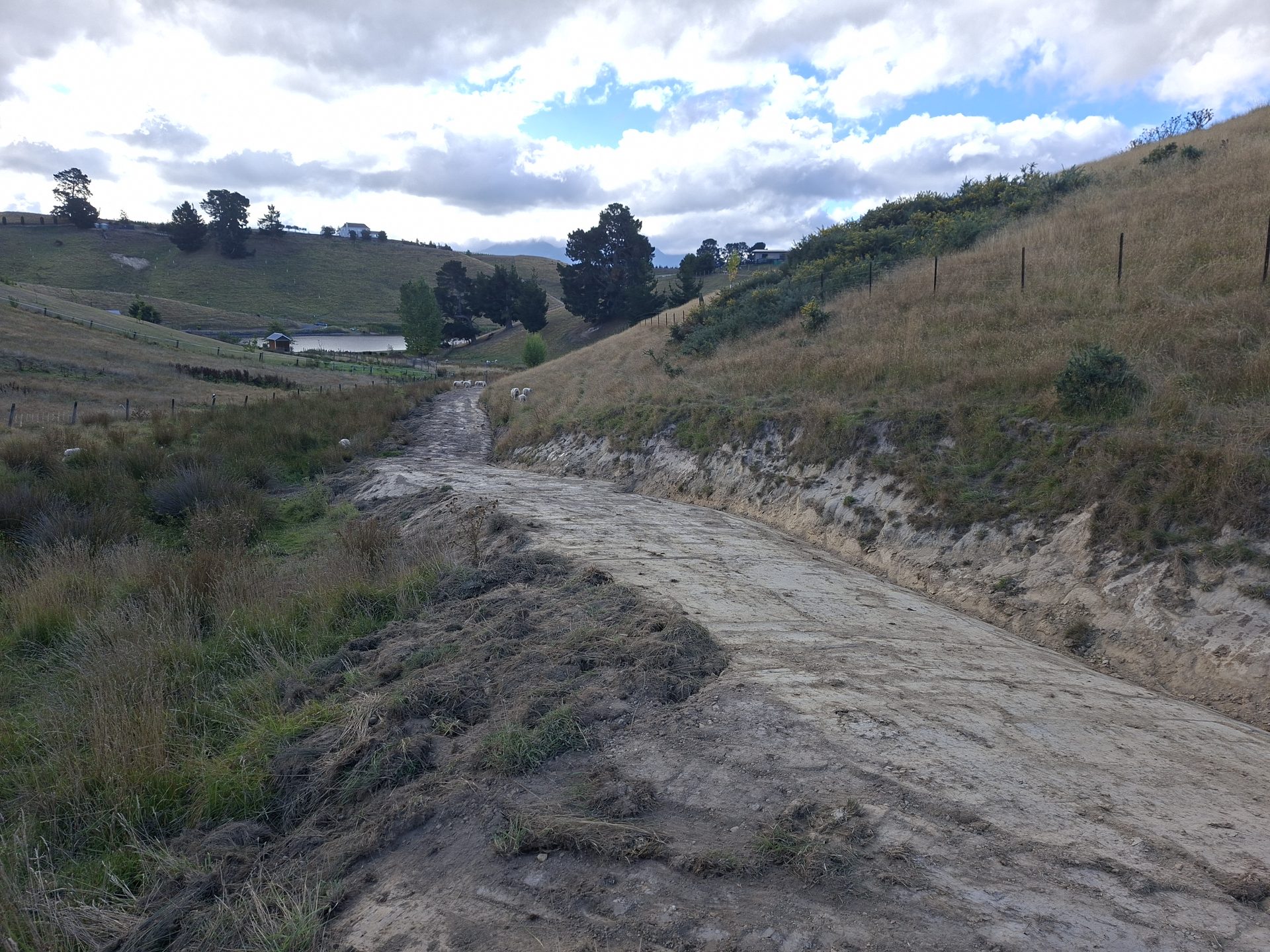
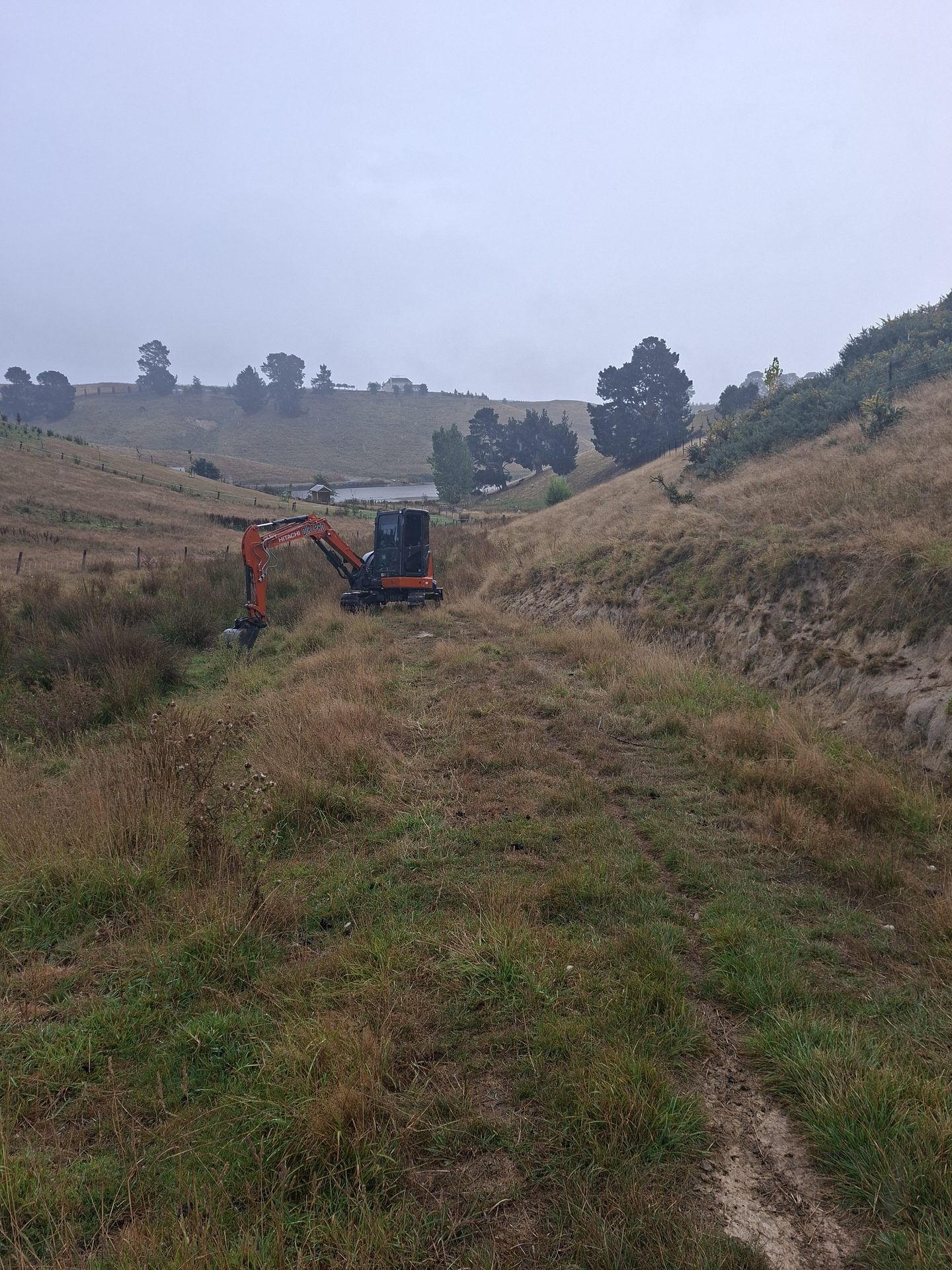
The owners at this Delta Lakes property in rural Marlborough had built their own access track up across the hillside. It worked fine in dry weather, but every solid rain event was tearing strips out of it, water sheeting down the running surface, cutting deeper ruts each time, and turning what should have been a stable farm track into something they could barely get a ute up. By the time we were called in the track was effectively unusable in wet weather. The cause was simple: the drainage features that keep a rural track alive had either silted up, been worn flat by traffic, or were never there to start with. We came in with the 5.5-tonne digger, re-cut the water table along the full length, dug silt traps at the low points, and added a series of driveable cut-off drains across the running surface. None of it is glamorous work, but it is the difference between a track that lasts a decade and a track that washes out every winter.
Call John on 021 0226 1219 for a free quote, or send a message.
Re-cutting the Water Table
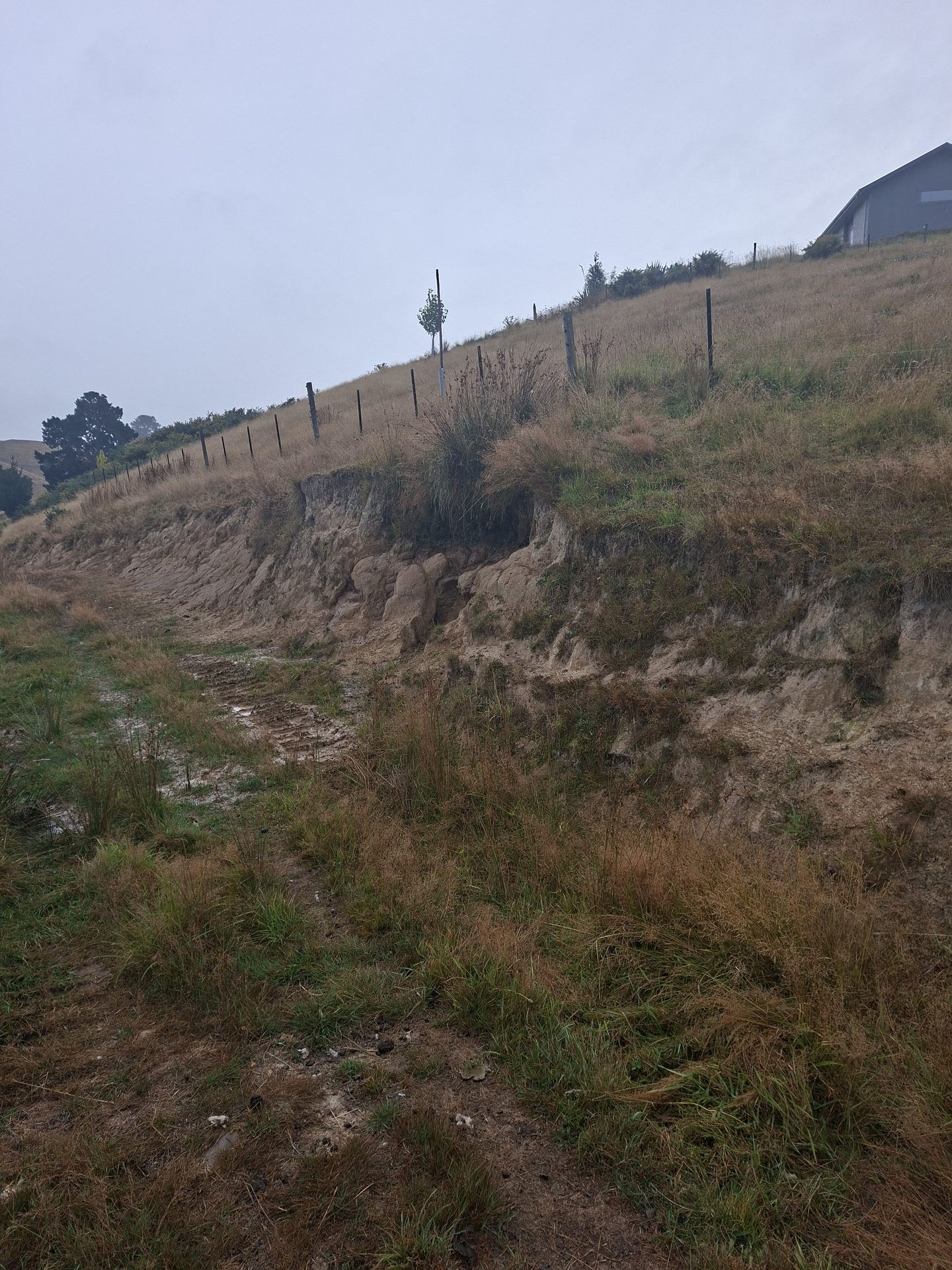
On a rural track, the "water table" is not the groundwater level, it's the shallow side channel running along the uphill edge of the track that catches surface water before it can sheet across the running surface. Combined with a slight cross-fall on the track itself, the water table is the single most important piece of farm track drainage. Get it right and the track sheds water continuously. Get it wrong and every rain event runs straight down the wheel tracks and starts cutting ruts.
On this Delta Lakes job the original water table had largely disappeared. Years of vehicle traffic, stock movement, and silt washing down off the hillside had filled the channel back in until it was indistinguishable from the rest of the track edge. Water was no longer being caught at the uphill side, it was running straight across the surface and finding the lowest point, which is always one of the wheel ruts.
We re-cut the water table along the full length of the track using the 5.5-tonne digger with a tilt bucket. The aim is a smooth, consistent fall, steep enough to keep silt moving down the channel, gentle enough that the channel itself doesn't scour out and become its own rut. We also re-shaped the cross-fall on the track so any water that does land on the surface runs sideways into the channel rather than down the length of the track. Where the channel had to discharge across the track to the downhill side, we tied it into one of the new cut-off drains. Simple stuff, but it has to be done by eye on the ground, there's no substitute for an operator who has cut a hundred of these.
Silt Traps That Catch the Worst of It
A silt trap is a small sump dug into the line of a drain or water table at a low point, basically an oversized pothole that the water has to slow down through. The water carries silt; the trap slows the water; the silt drops out of suspension and sits in the bottom of the sump instead of being washed downstream. Every rural property with running water and clay subsoil needs them somewhere.
On this Delta Lakes track we put silt traps at the obvious low points where water naturally collected, places where the water table fed into a cut-off drain, or where two flow paths met. Each one is a metre or so across and a couple of feet deep. The sides are battered back so they don't collapse, and the spoil is feathered out into the surrounding ground rather than left as a ridge that water would just run around.
The reason silt traps matter on a property like this isn't just about the track. Below the track there are gullies that feed into watercourses, and on neighbouring blocks there are vineyard tracks and lifestyle blocks closer to streams. Without traps, every rain event sends clay-laden water straight off the property and into the catchment. With traps, the silt drops out on the owner's land where it belongs, and only relatively clean water leaves the site. Once a year or so the owner can come along with a small digger, clean out the sumps, and tip the silt back onto pasture as topsoil. Cheap maintenance, big payoff.
Driveable Cut-Off Drains
The third piece of the puzzle is cut-off drains. These are shallow swales cut at an angle across the full width of the track, sloping down to the downhill side. Their job is to intercept any surface water that does end up running down the length of the track and divert it off to the side before it has run far enough to build speed and cut a rut. Spaced every fifteen or twenty metres on a sloping track, they break up the run length and stop ruts forming in the first place.
The "driveable" part is what makes them practical. The cut-off drain has to be shallow enough, and the leading and trailing edges battered back enough, that a ute, quad, or small tractor can roll across it at walking pace without grounding out or jarring the suspension. Get it too sharp and the owner will hate them, drive around them, and eventually fill them in. Get it right and they're invisible until you watch how the water moves in the next rain event. We cut each one with the digger on the angle of the track, then walked it with a quad to confirm it didn't catch the diff or scrape a tow bar.
Why Drainage Matters on Rural Marlborough Tracks
Marlborough gets long dry stretches and then sharp, heavy rain events, and a lot of the region sits on clay subsoils that hold water rather than soaking it away. Together those two things are murder on unsealed tracks. A track that looked fine all summer can be cut to ribbons in a single night of rain if the water has nowhere to go but along the wheel ruts. The fix isn't a one-off; rural tracks need active drainage maintenance every two to three years to keep the water table clear and the cut-off drains working. The good news is that a half-day with a digger now saves you a week of rebuilding next winter, and a property with proper rural track drainage holds its value far better than one with a track that's quietly washing into the gully.
Got a farm track, lifestyle-block driveway, or vineyard access road that's rutting out every winter? We do rural track drainage right across Marlborough, water tables, silt traps, cut-off drains, the lot. Get in touch for a free no-obligation site visit and quote. Track drainage is one part of the earthworks we do across Marlborough, and of our gravel driveway and rural track work.
Get a Free QuoteOr call John direct: 021 0226 1219