
Steep Site Drainage
Irrigation & Drainage on Challenging Terrain, Marlborough
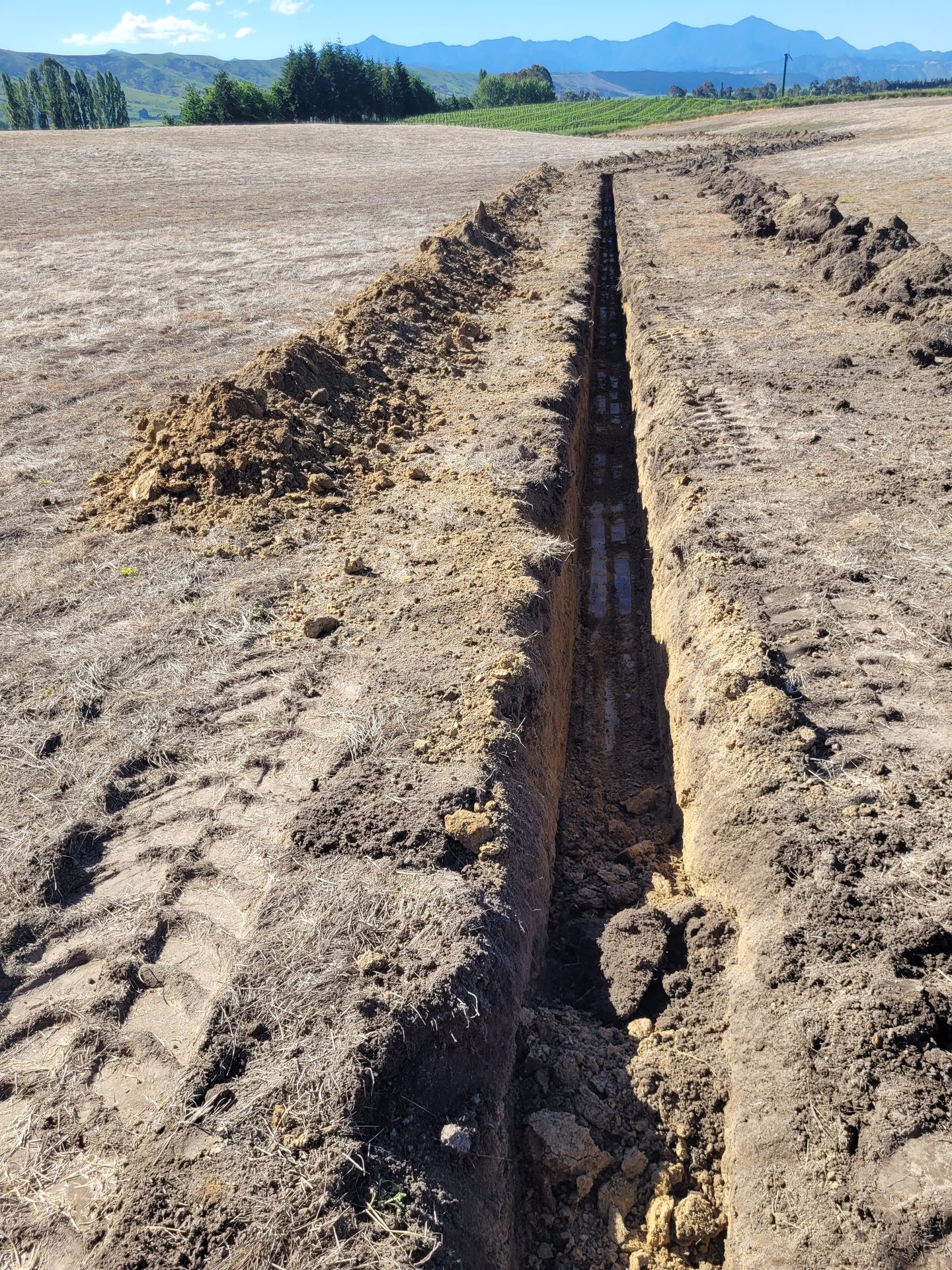
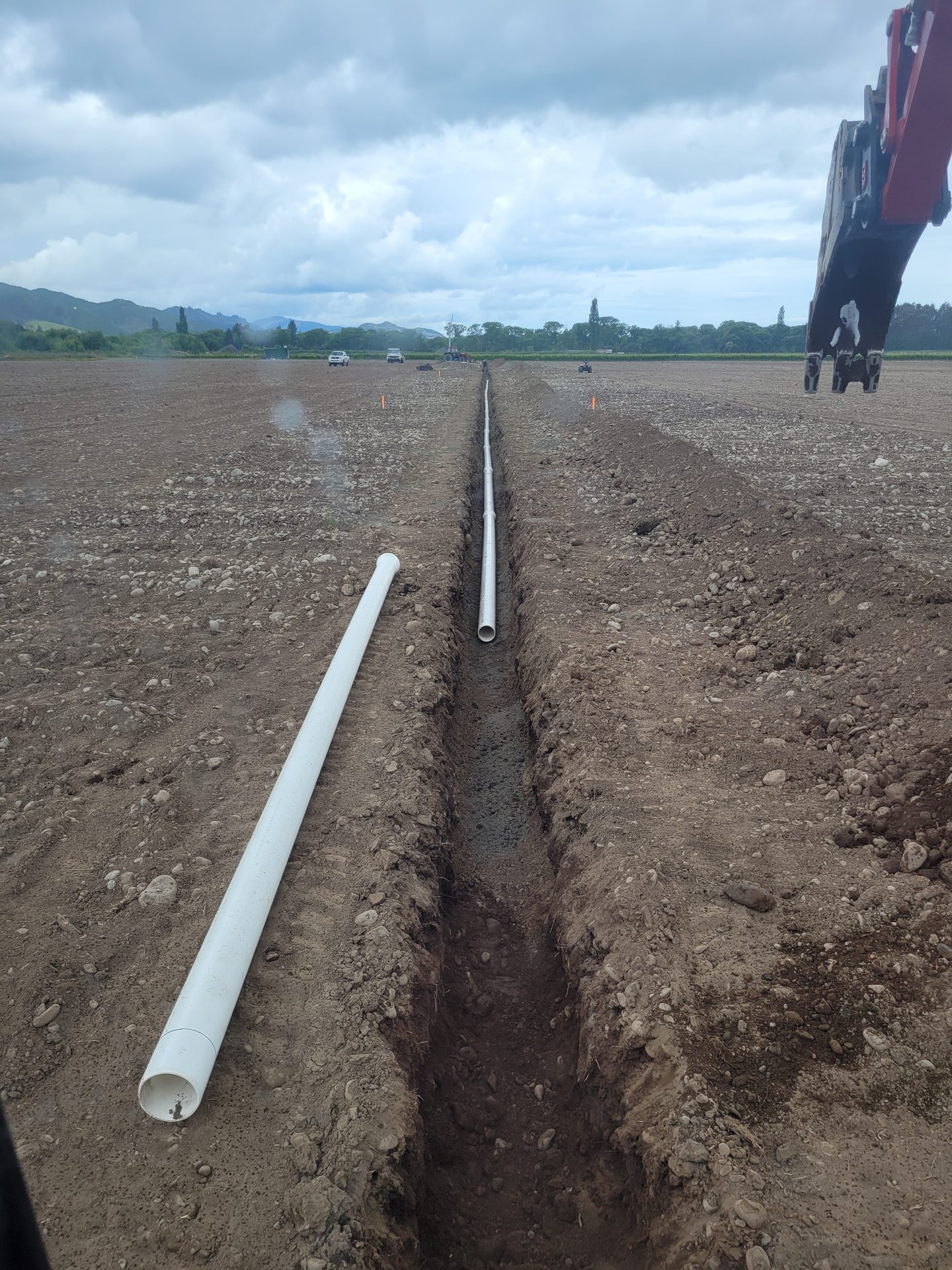
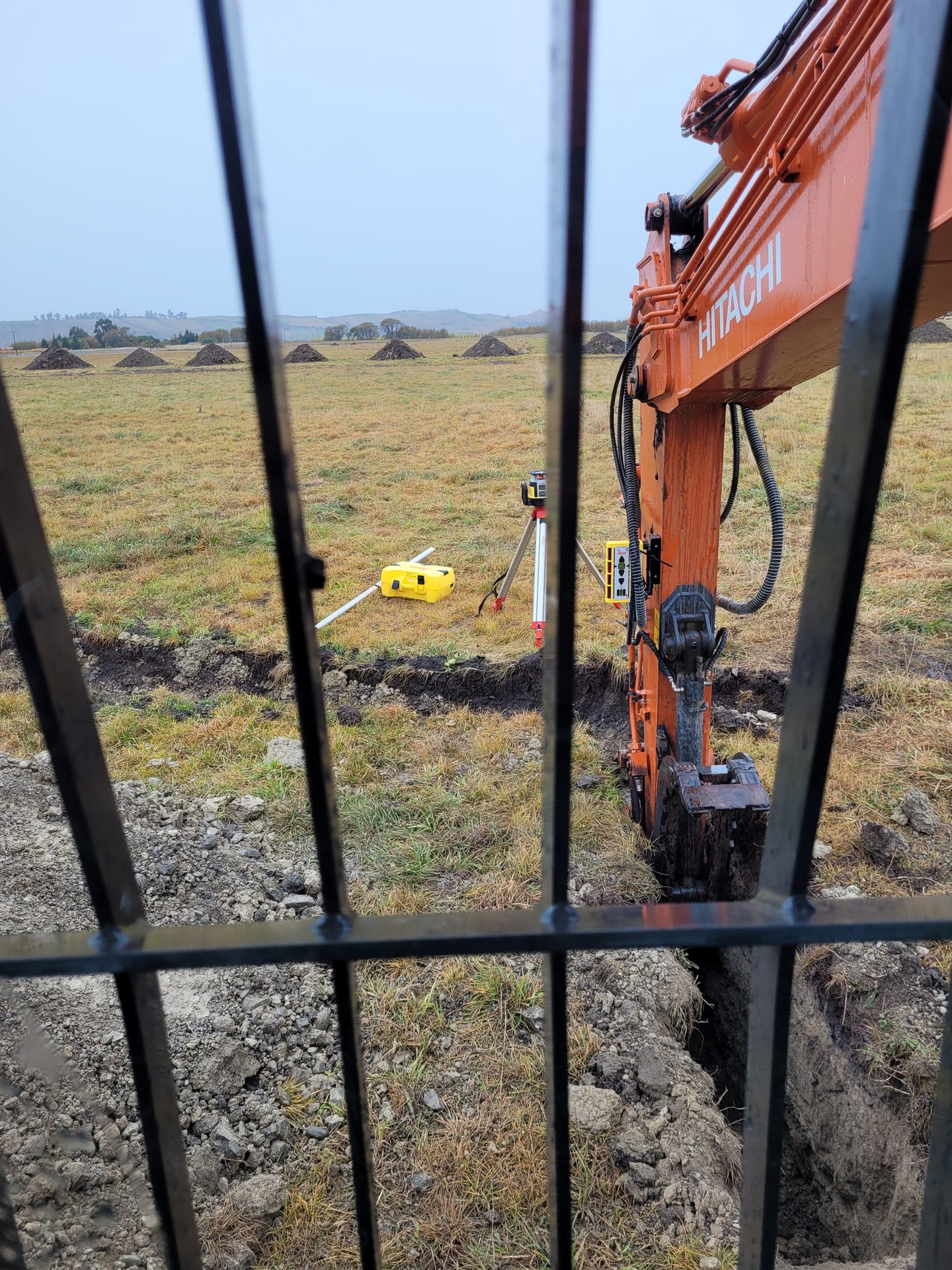
This project involved installing irrigation on a steep rural site in Marlborough. Working on difficult terrain requires precision, we used laser levelling to ensure correct fall on the pipe runs and carefully managed access on the steep gradients.
Call John on 021 0226 1219 for a free quote, or send a message.
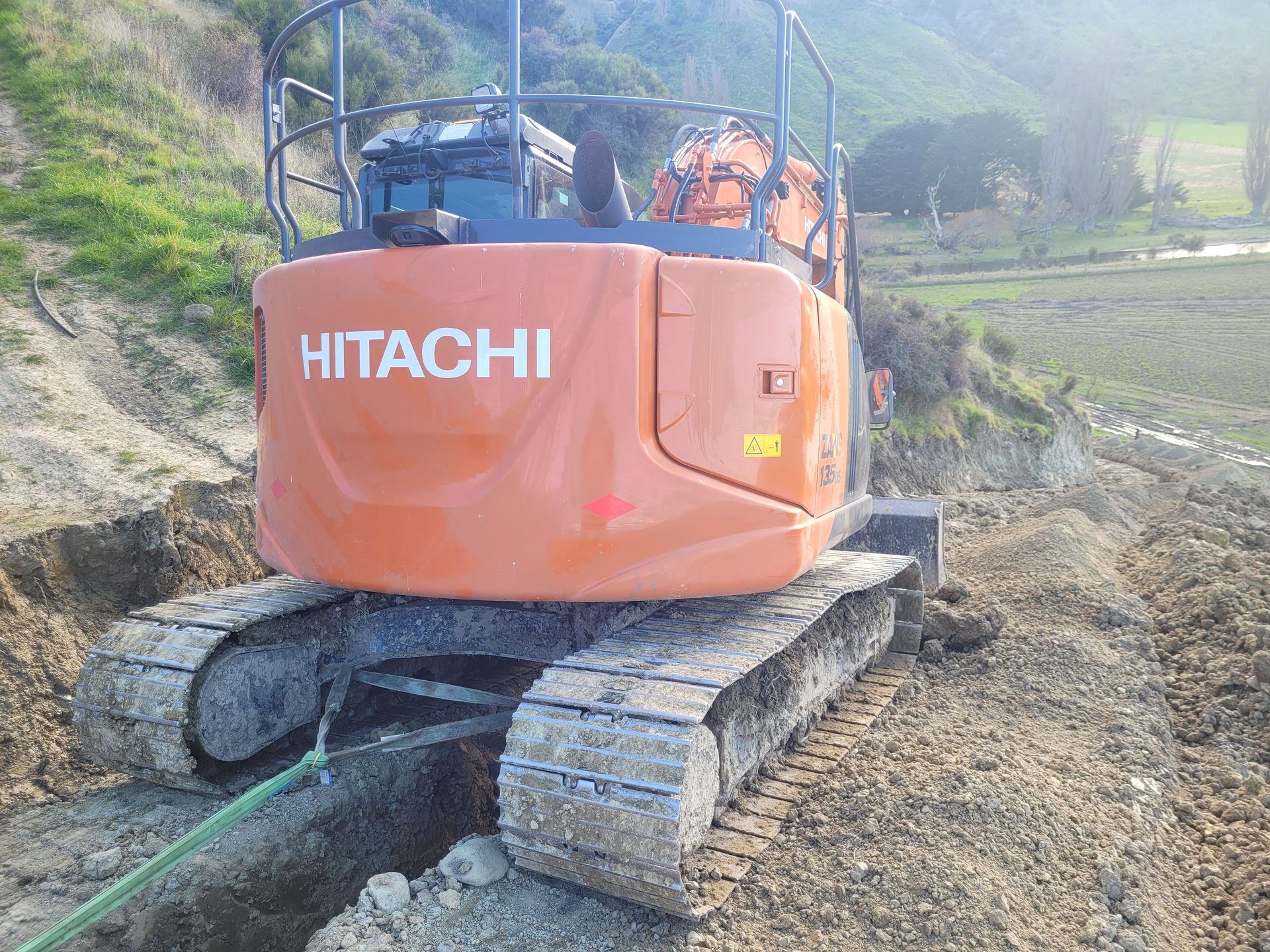
The work included excavating long trenches, laying pipe, and backfilling to grade. Our Hitachi excavator handled the challenging slopes while maintaining accuracy throughout the installation.
Why steep sites need experienced operators
Flat-site work and hill-country work are different jobs in the same trade. On a gradient, a digger sits at an angle the whole day, every bucket loaded uphill or downhill changes how the machine wants to move, and a moment of inattention can shift the tracks out from under you. Operator experience is what keeps the work safe and accurate.
Machine positioning becomes the planning task. Where do you sit to dig the next bay without undercutting yourself? Where does the spoil go so it doesn't slump back into the trench? How do you keep the bucket pulling along the fall line rather than across it? A contractor who mostly works on flat lifestyle blocks will struggle on the kind of rural Marlborough hillsides where vineyards run up to the bush line. We grew up in this country and we plan the access, the spoil placement, and the sequence before the machine ever turns a key.
Drainage vs irrigation on steep ground
Drainage and irrigation pipe both need correct fall, but for opposite reasons. Drainage moves water OFF the site, you want a continuous downhill grade so storm water and groundwater run away from buildings, tracks, and root zones. Irrigation moves water ONTO the site, fall still matters, because air locks and pressure variation will starve emitters at the top of a run if the line dips and rises.
On a steep block both jobs are usually happening together: drainage lines catching seepage off the hill, and irrigation mainlines feeding rows below. Setting them out with a laser keeps the grade honest over long runs where eyeballing it would drift.
What we use
For this kind of work we run a 14-tonne Hitachi ZAXIS 135US for the bulk trenching, enough reach and breakout to cut long runs at depth without re-positioning every few metres. A Hitachi ZX55 mini comes in for the tight spots: corners around existing posts, tie-ins to tanks, and any work close to vines or buildings where the big machine can't fit. A laser level rides on the bucket to hold fall over long pipe runs, which is what separates a pipe that works for thirty years from one that silts up or air-locks within a season.
The Isuzu CXZ 390 tipper handles any spoil that needs to come off the site, on steep blocks a lot of trench spoil can be reused locally for landscape contouring or track repair, which saves trucking and gives the client something useful out of what would otherwise be a disposal cost.
Working around vines, stock, and neighbours
Rural Marlborough sites rarely come empty. Trenching through a producing vineyard means working between rows without bumping wires, undercutting posts, or compacting wet headlands. On lifestyle blocks there's stock to keep behind temporary fencing and water lines that have to stay live while we work. Neighbours on hill country are usually close enough that machine noise, dust, and traffic all need managing. We plan access and staging so the disruption is short and predictable rather than dragging on for weeks.
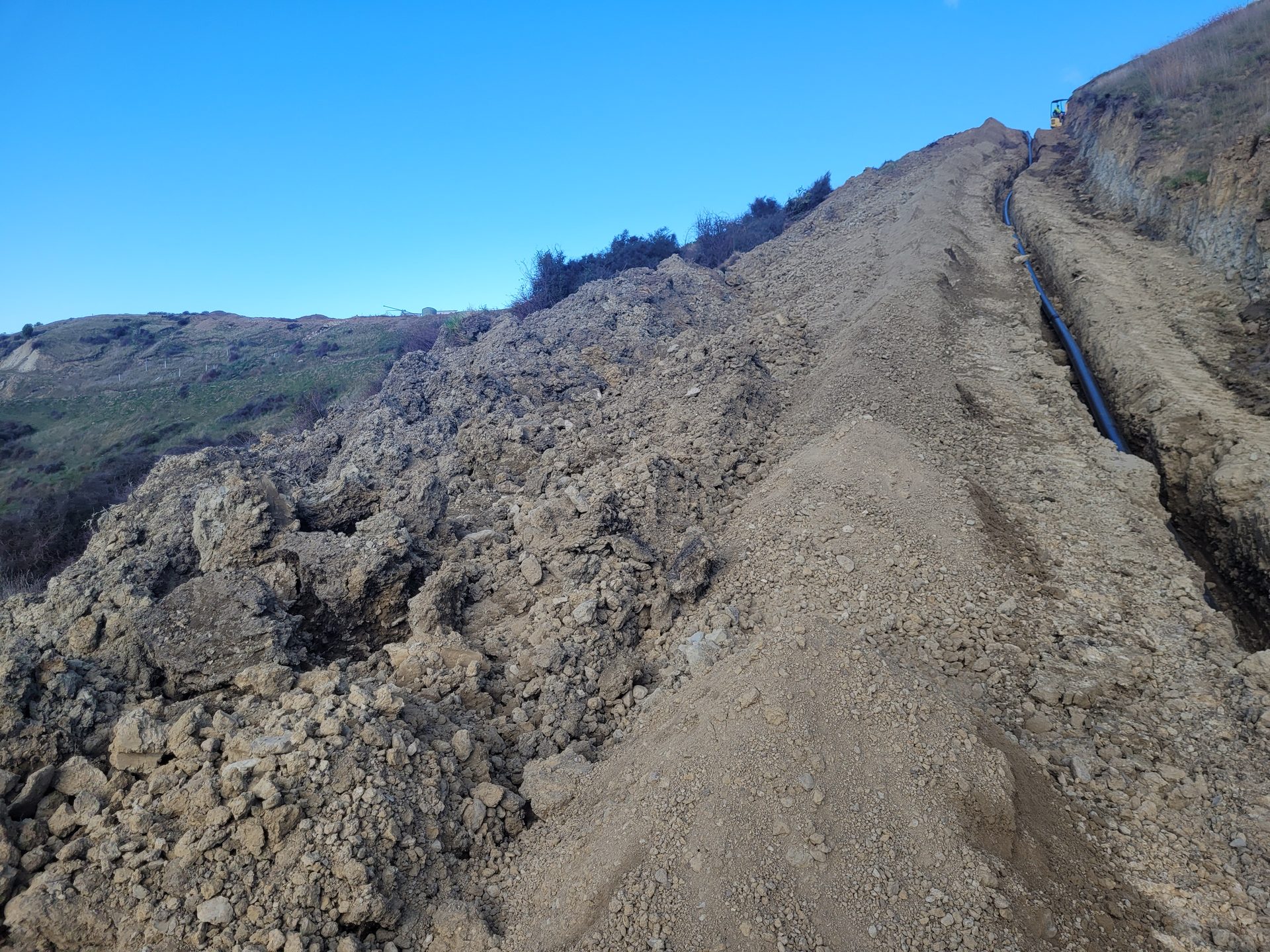
Need irrigation or drainage installed on a difficult site? We have the equipment and experience for steep and challenging terrain. Drainage is one strand of our earthworks across Marlborough.
Get a Free Quote