
Land Clearing
Vegetation Removal & Burn-Off, Marlborough
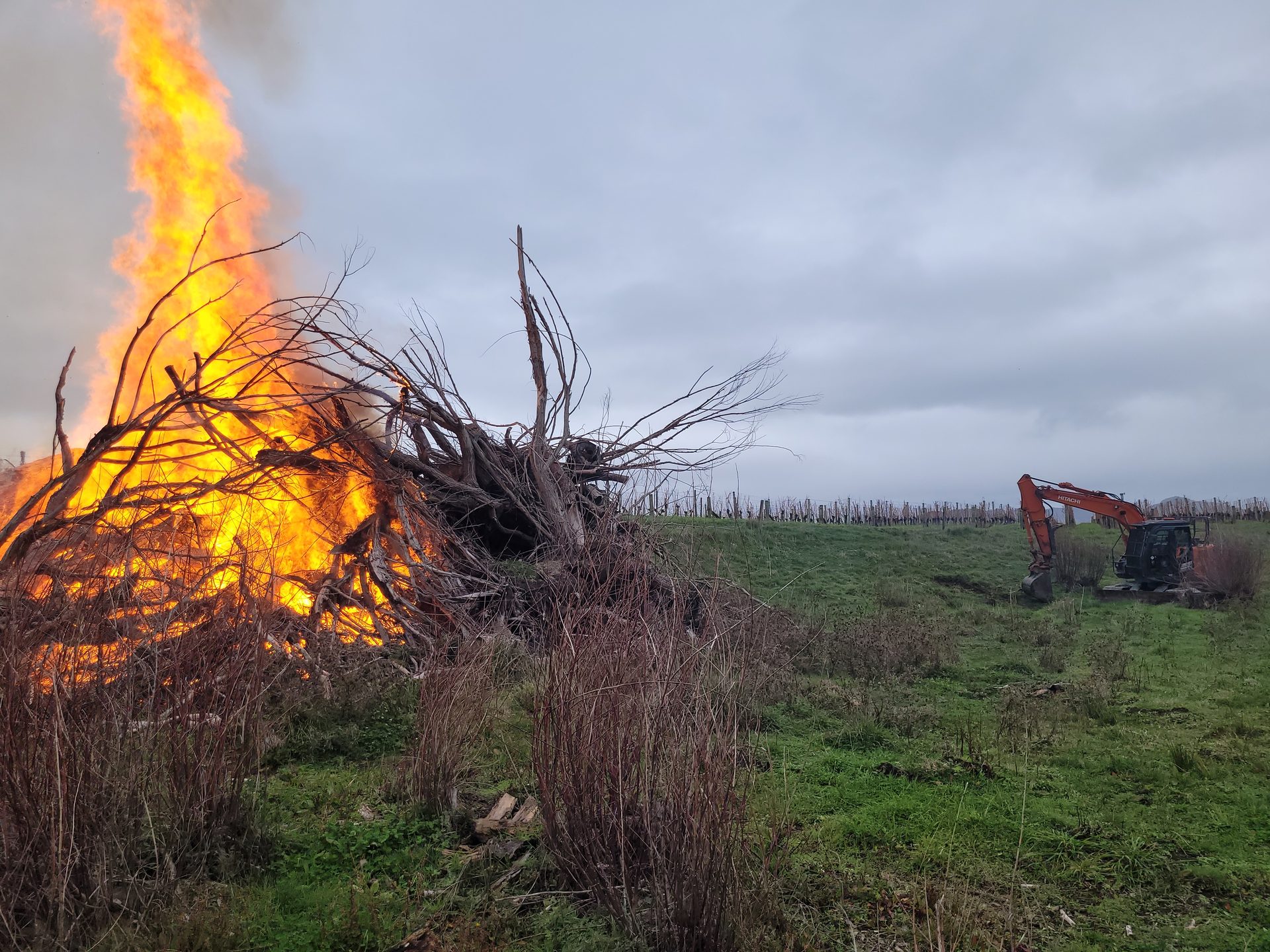
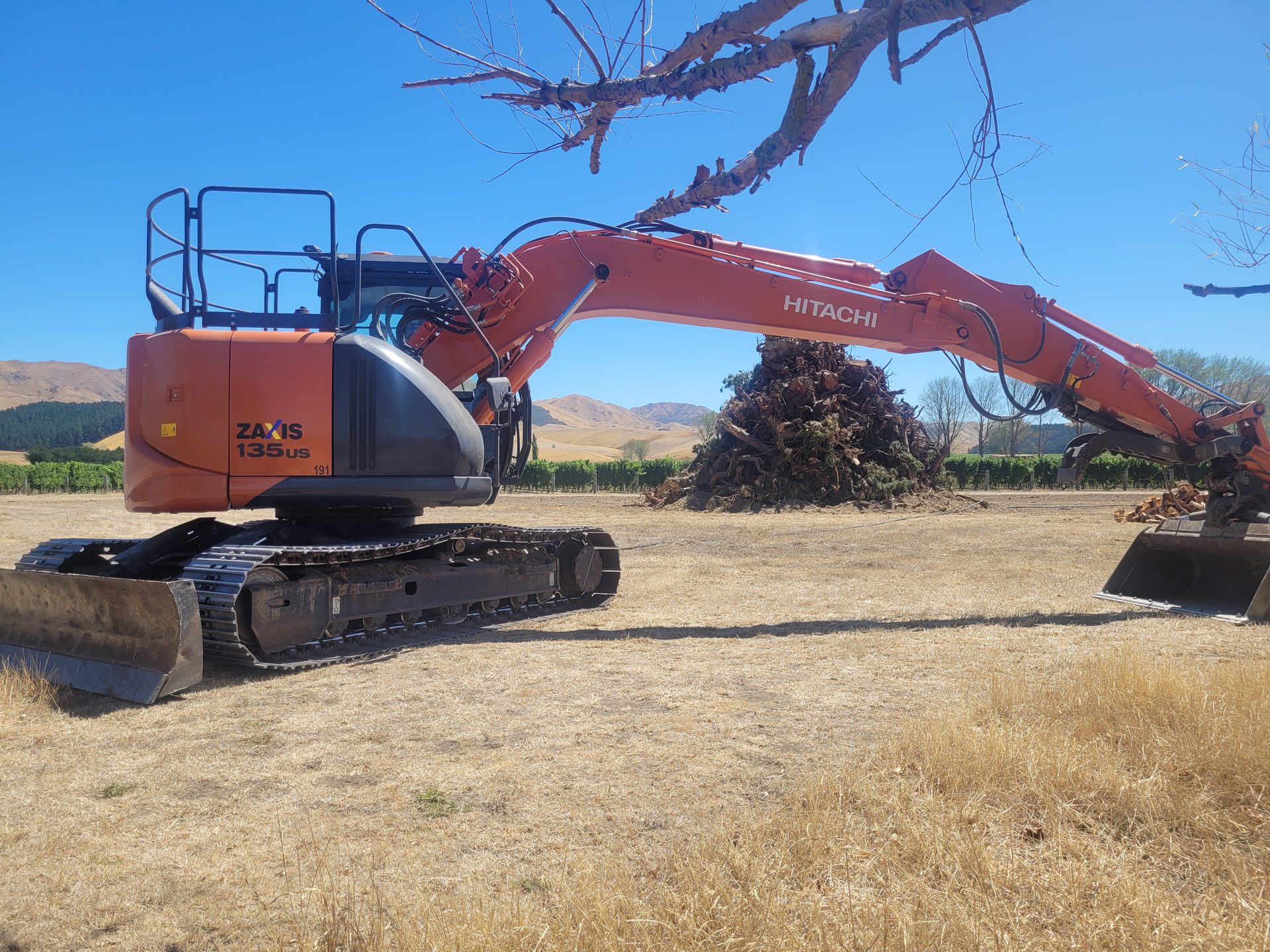
Whether it is clearing scrub for new development, managing burn piles after vegetation removal, or preparing land for replanting, we have the equipment to handle the job efficiently. Our 14-tonne Hitachi excavator makes quick work of stacking burn piles and managing the controlled burn-off process.
Call John on 021 0226 1219 for a free quote, or send a message.
Proper vegetation clearing and burn-off management is essential for land development, vineyard redevelopment, and fire risk reduction on rural properties throughout Marlborough.
Burn-off windows and Marlborough fire seasons
Marlborough dries out hard over summer, and Fire and Emergency NZ together with the Marlborough District Council shift the region through open, restricted, and prohibited fire seasons as conditions change. In practice, restricted and prohibited windows commonly run from around November through to April, though the exact dates move year to year depending on rainfall and fuel loads.
What that means for a clearing job: timing matters. We try to do the clearing and stacking work early so piles have time to dry, then burn during an open season or under a fire permit if conditions require one. Leaving the planning until the back end of summer is how good jobs end up sitting around for a year. Checking the current fire season status with FENZ before lighting up is non-negotiable, and on bigger burns we'll line up a permit well in advance.
Separating burn from haul
Not everything cleared off a block belongs on the burn pile. Clean woody vegetation, gorse, broom, scrub, willow, prunings, burns well and is generally best dealt with on-site, especially gorse and broom where burning helps deal with the seed bank and limits the biosecurity risk of carting infested material somewhere else.
Other material is better off the property entirely. Treated timber, plastic vine guards, irrigation pipe, wire, and general rubbish can't be burned legally and need to be carted off for recycling or disposal. Stumps and large butts can also be a poor fit for burn piles, they smoulder for days, and are often better mulched or buried where appropriate. We sort as we stack so the burn day is just a burn day.
Pre-replant prep
Clearing is rarely the finish line. Once a block has been burned off, the ground is left with scorched soil, root systems still in place, and uneven contours where stumps were lifted. Before anything new can go in, vines, trees, pasture, or a building platform, the ground needs to be ripped to break up the root mat, levelled to working grade, and in some cases topped with imported soil. We can run straight from clearing into ripping and levelling with the same machines on site, which saves a separate mobilisation.
On vineyard redevelopment blocks the ripping is particularly important. New vines won't establish through a compacted root pan, and a poor prep job shows up two or three seasons later as patchy growth and uneven yields. It's worth doing once, properly.
Stacking burn piles the right way
A well-built burn pile burns hot, burns clean, and burns out in a single day. A badly stacked one smoulders for a week and produces clouds of low-grade smoke that the neighbours will rightly complain about. The difference is air gaps and material orientation, heavier butts on the bottom with airflow underneath, lighter scrub and prunings on top, and the whole pile shaped so it collapses inward rather than spreading outward as it burns down.
With a 14-tonne digger you can build piles fast, but it's the placement that matters. We keep piles well clear of fence lines, power lines, and standing vegetation, and we work with the prevailing wind in mind so smoke doesn't sit over a house or a road. Good stacking up front is what makes burn day a one-day job rather than a week-long babysit.
Need vegetation cleared or burn-off managed on your property? We handle land clearing jobs of all sizes. Land clearing is part of the earthworks we do across Marlborough.
Get a Free Quote