
Vineyard Post Removal
Non-Destructive Removal for Recycling, Marlborough
When vineyards are being redeveloped or replanted, the existing posts and vines need to come out. We specialise in non-destructive removal, carefully extracting posts intact so they can be recycled and reused rather than ending up as a liability.
Call John on 021 0226 1219 for a free quote, or send a message.
Why posts get reused, not dumped
Vineyard posts are usually treated pine, and treated timber is one of the more awkward waste streams a rural property can produce. It can't go on the burn pile, the treatment chemicals don't belong in smoke, and landfill charges for treated timber add up fast when you're pulling thousands of posts off a redevelopment block.
Pulling them intact changes the maths completely. A post that comes out clean has years of useful life left in it. Instead of paying tip fees to get rid of a problem, you've got a stack of materials that someone else genuinely wants. The environmental angle matches the economic one: keeping serviceable timber out of landfill is the right call regardless of who pays the bill. The trade-off is that it takes more care on the machine, yanking posts apart is fast and easy, but it leaves you with firewood and a disposal bill.
Where these posts end up
We work with a local subby who takes the posts off-site and on-sells them into the secondary market. From there they end up in farm fencing on lifestyle blocks, garden retaining walls, pole sheds and pole barns, vegetable garden edging, and any number of other rural reuse projects around the top of the South Island.
Strainers and longer posts tend to find the highest-value uses; shorter intermediate posts get used in lighter fencing or chopped down. Either way the material gets a second life on a Marlborough farm rather than being landfilled as construction waste.
Vineyard redevelopment in Marlborough
Marlborough is Sauvignon Blanc country, the variety dominates the region and drives most of the planting decisions. Vines themselves can live for decades, but commercial blocks get pulled and replanted on a rough 20-30 year cadence as yields drop, clones go out of fashion, trellis systems date, or rootstock disease starts to bite.
That's the cycle that drives post-removal work. Once a grower has decided a block is coming out, the timing window to remove vines, pull posts, prep the ground, and replant is tight, typically aligned with the vineyard's off-season. We can package the whole sequence so the block is back in the ground without losing more seasons than necessary.
How the non-destructive pull works
The technique is straightforward but it takes a feel for the machine. We lift each post vertically with a clamp or chain, breaking the friction in the ground without snapping the timber. On posts that have been in for twenty-plus years the soil grip can be significant, especially in the heavier silts around the Wairau plains, and impatient operators end up shearing posts off at ground level, which leaves a stub to dig out and a post that's now firewood.
Done properly, the post comes out clean with the butt intact and any concrete or anchor still attached. From there we stack on pallets for cartage, separating strainers from intermediates so the buyer can pick out what they need. Vine material and wire are dealt with separately, the wire gets recovered for scrap and the vines either burned on-site or mulched depending on the block's plan.
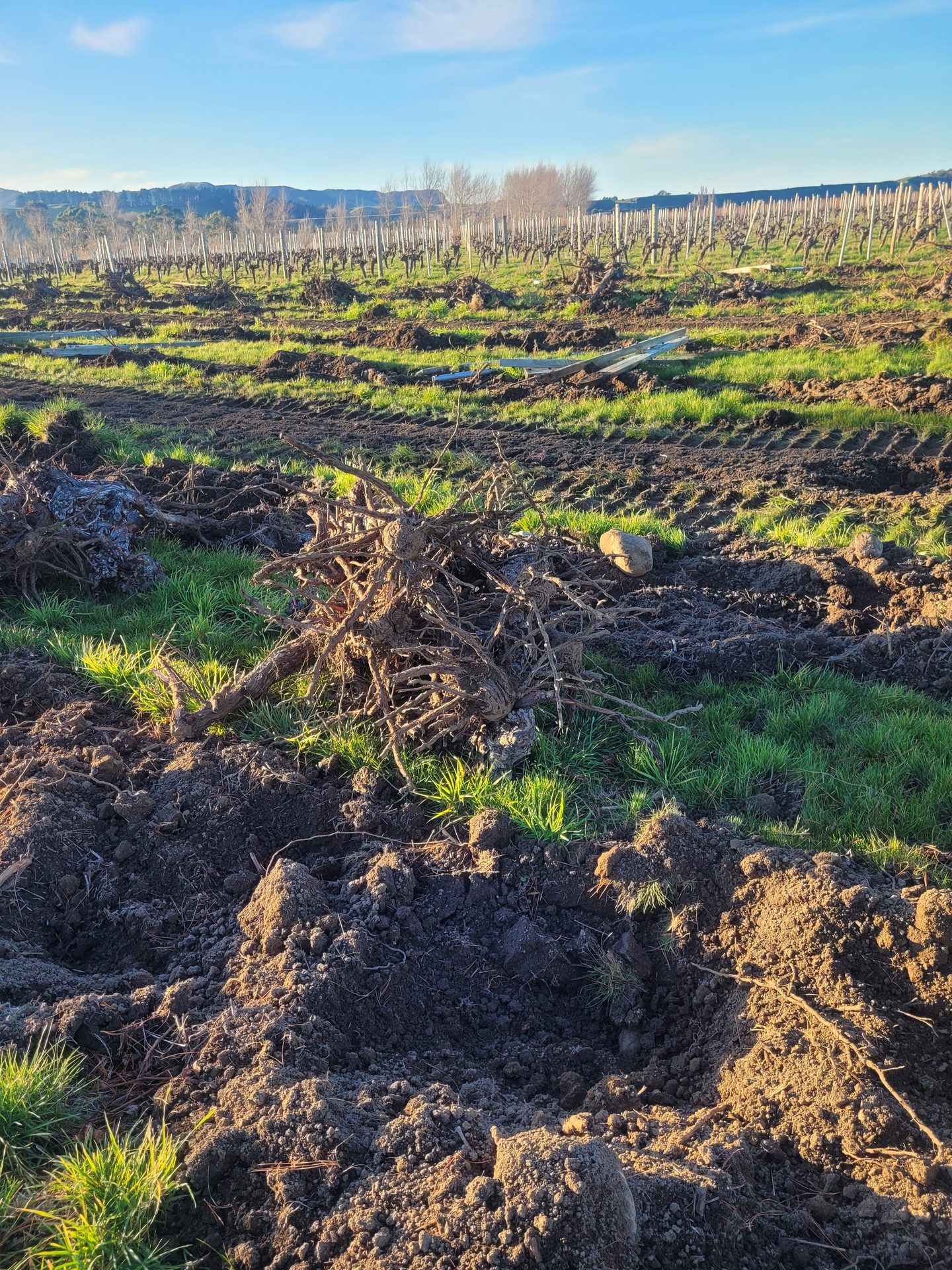
Replanting or redeveloping a vineyard? We can complete all stages efficiently from removal to redevelopment. Get in touch to discuss your project so we can tailor a package to suit your budget. Vineyard prep is one of the earthworks services we offer across Marlborough.
Get a Free Quote