
Site Remediation
Land Restoration & Ground Repair, Blenheim
After construction, demolition, or years of agricultural use, land often needs remediation before it can be repurposed. DirtPro provides site remediation services across Blenheim and Marlborough, restoring damaged or degraded ground to a usable condition for building, planting, or subdivision.
Call John on 021 0226 1219 for a free quote, or send a message.
Common remediation work includes stripping and replacing contaminated topsoil, re-grading eroded or rutted ground, filling and compacting old foundations or service trenches, and reshaping land that has slumped or settled over time. We regularly work on former vineyard sites, old building platforms, and rural properties where the ground needs significant work before the next use.
When does a site need remediation?
Remediation isn't a single job, it's whatever earthworks are needed to bring degraded or disturbed ground back to a state where it can be built on, planted, or sold. The common triggers we see across Blenheim and the Wairau are:
- After demolition, slab removal, old building platforms, water tanks, or sheds leave broken services, voids where footings sat, and a mix of fill and clean ground. Backfilling and compacting this back to a uniform subgrade is what makes the land usable again.
- Post-vineyard redevelopment, when a block comes out of vines or shifts variety, what's left behind is thousands of post holes, compacted headlands, irrigation trenches with old polythene and drippers, and decades of root mat. Walking away from that and replanting straight back into it is how blocks underperform for ten years.
- Slumped or settled fill, old building platforms, poorly compacted subdivisions, and historic farm fills slump as the organic content rots out and the loose material consolidates. By the time someone notices the deck has dropped 100mm or a track has developed a hollow, remediation needs to dig the failed fill out and replace it with properly compacted engineered fill.
- Erosion repair, gullies cutting into pasture, slip scars on hillsides, washouts on access tracks. Once erosion has started it doesn't stop on its own, the fix is shaping the ground back, installing drainage to redirect the flow, and stabilising the surface.
- Pre-build or pre-subdivision prep, sometimes the existing ground is fine, but it's the wrong shape, wrong level, or has the wrong material near the surface. Remediation here is about reshaping and replacing topsoil so the next stage (foundation, driveway, pad) starts on solid ground.
Post-vineyard redevelopment in Marlborough
This is the most common remediation work we do across the Wairau and Awatere valleys. A block comes out of vines, sometimes because of disease pressure (trunk disease, leafroll virus), sometimes because the variety is no longer commercially viable, sometimes because the land is being converted out of viticulture entirely. What looks from the road like an empty paddock is in fact a patchwork of buried infrastructure and compacted ground that won't perform as either pasture, replant, or building platform without proper work.
The post holes are the first headache. A typical vineyard is 1,800 to 2,500 posts per hectare, each with a CCA-treated stub still in the ground or pulled and left in a windrow. Sites where posts have just been snapped off at ground level need every stub extracted before the block can be re-used, both because the timber is treated, and because mowers, ploughs, and replant equipment will hit them otherwise. We extract with the 14-tonne Hitachi for the heavier blocks, working systematically across the site and stockpiling treated material for proper disposal.
The irrigation reticulation is next. Old vineyards have a buried network of mainlines, sub-mains, and dripper laterals, usually black polythene, with brass fittings at every junction. Most of it gets pulled by the digger as the block is worked over, but parts always stay buried and turn up later in unexpected places. Where the block is being replanted we map and reuse what's still serviceable; where it's being converted out, we pull as much as we can and dispose of the rest properly.
Then there's the headland compaction. Twenty or thirty years of tractor traffic on the same headland creates a compacted pan 200-400mm down that nothing grows through. Ripping it out, pulling a 3- or 5-tyne ripper through with the digger, breaks that pan up and lets water, roots, and air back in. On replant blocks this is the difference between vines that establish in two seasons and vines that struggle for five.
Post-demolition reinstatement
When a slab, water tank, shed, or old building platform comes out, the ground underneath is rarely ready for the next use. We typically find some combination of: broken services (water, power, drainage stubs that were cut off and capped), pockets of hardfill or rubble that was packed under the slab when it was first poured, the cleaner ground around the perimeter where excavation never went, and patches of contamination where fuel tanks or chemical storage sat.
The reinstatement work is straightforward but has to be done properly. Strip out the rubble and any obviously contaminated material, fill the voids with imported clean fill in lifts no thicker than a digger bucket can compact, compact between each lift, then re-topsoil if the site is going back to lawn or planting. If the site is going to a new build, we level to subgrade and leave it ready for the slab crew.
Working with contaminated land assessments
Some sites need formal contaminated-land assessment before remediation can start. Old farm sheds with historic chemical storage, sheep dip sites, fuel storage areas, and orchards with decades of spray history can all trigger HAIL (Hazardous Activities and Industries List) flags on the property file at the Marlborough District Council. Where that's the case, a contaminated-land consultant takes sampling, runs the testing, and writes the management plan that defines what has to be stripped, where it goes, and how it's documented.
Our role on those jobs is the earthworks side, stripping the material to the depths the consultant specifies, segregating contaminated from clean stockpiles, loading and carting to the approved disposal facility, and replacing with tested clean fill. We work alongside the consultant rather than instead of one. If you're not sure whether your site needs assessment, the MDC property file is usually the first place to look, and we can recommend consultants we've worked with before.
How we approach a remediation job
Every remediation job starts with a site walk. We look at ground conditions, drainage patterns, what's known about the site's history, and what the land needs to be ready for. From that we work out the depth of material that needs to come off, whether imported fill is required, what compaction standard the next use calls for, and what disposal is needed for the stripped material.
With the 5.5-tonne Hitachi ZX55 mini, access to a 14-tonne Hitachi ZX135 for the bigger jobs, and our Isuzu CXZ 390 tipper truck, strip-cart-import-compact can all happen on the same mobilisation. That's the cost saving on remediation, most of the budget on these jobs is in the trucking, and being able to load straight from our own digger into our own truck cuts out the wait time, the second mobilisation fee, and the inevitable scheduling clash with a separate cartage contractor.
What's included and what's extra
We quote remediation jobs as time-and-materials. The hourly rate covers the operator, the digger, and standard attachments. Truck cartage is charged separately based on loads carted. Disposal fees at Bluegums Regional Landfill or whatever facility is appropriate are passed through at cost, we show you the dump tickets. Imported fill, topsoil, or aggregate is supplied at cost. There's no charge for the initial site walk and quote.
If a contaminated-land consultant is involved their fees sit outside our quote, they invoice you directly for sampling, testing, and management plan work.
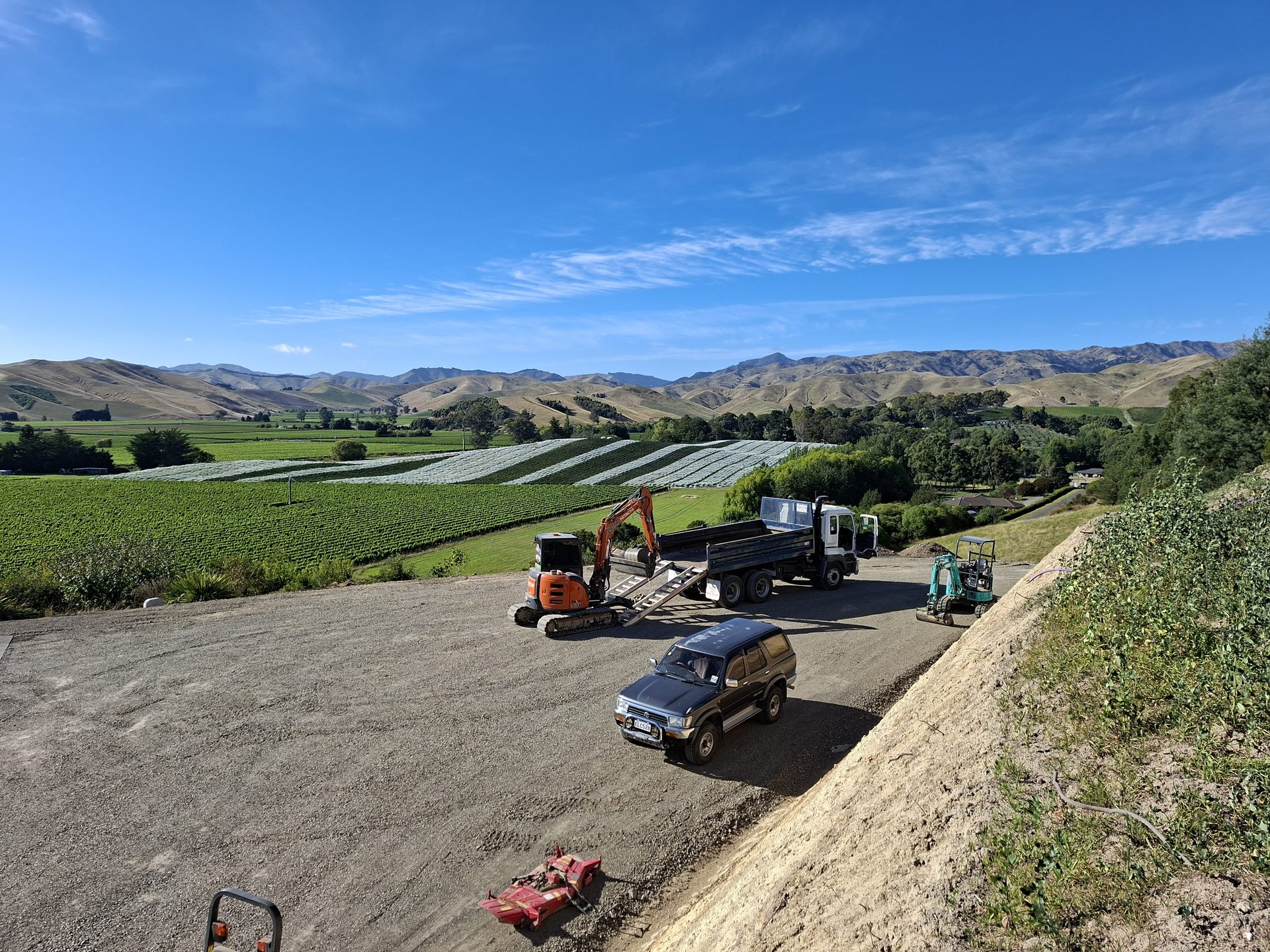
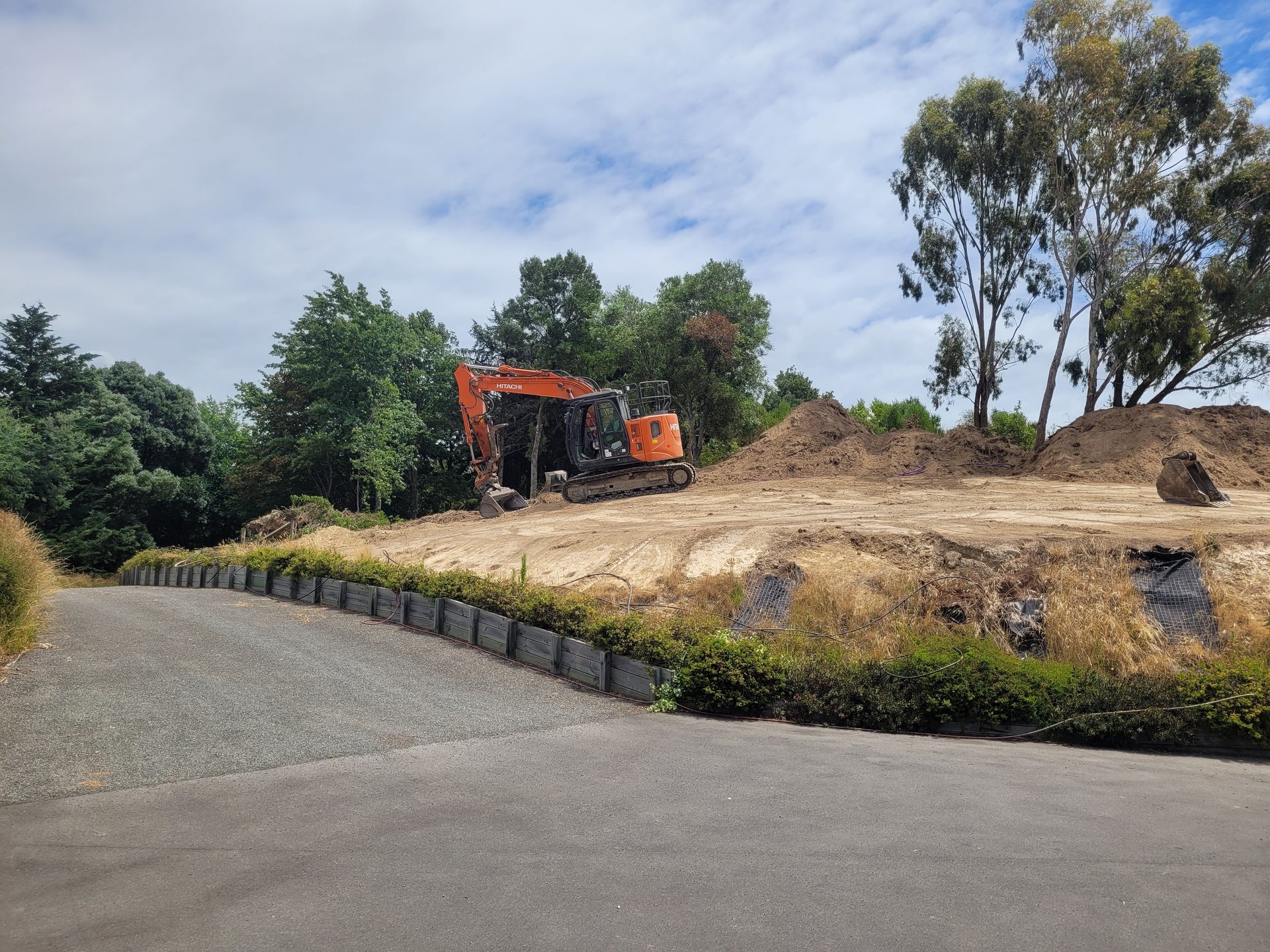
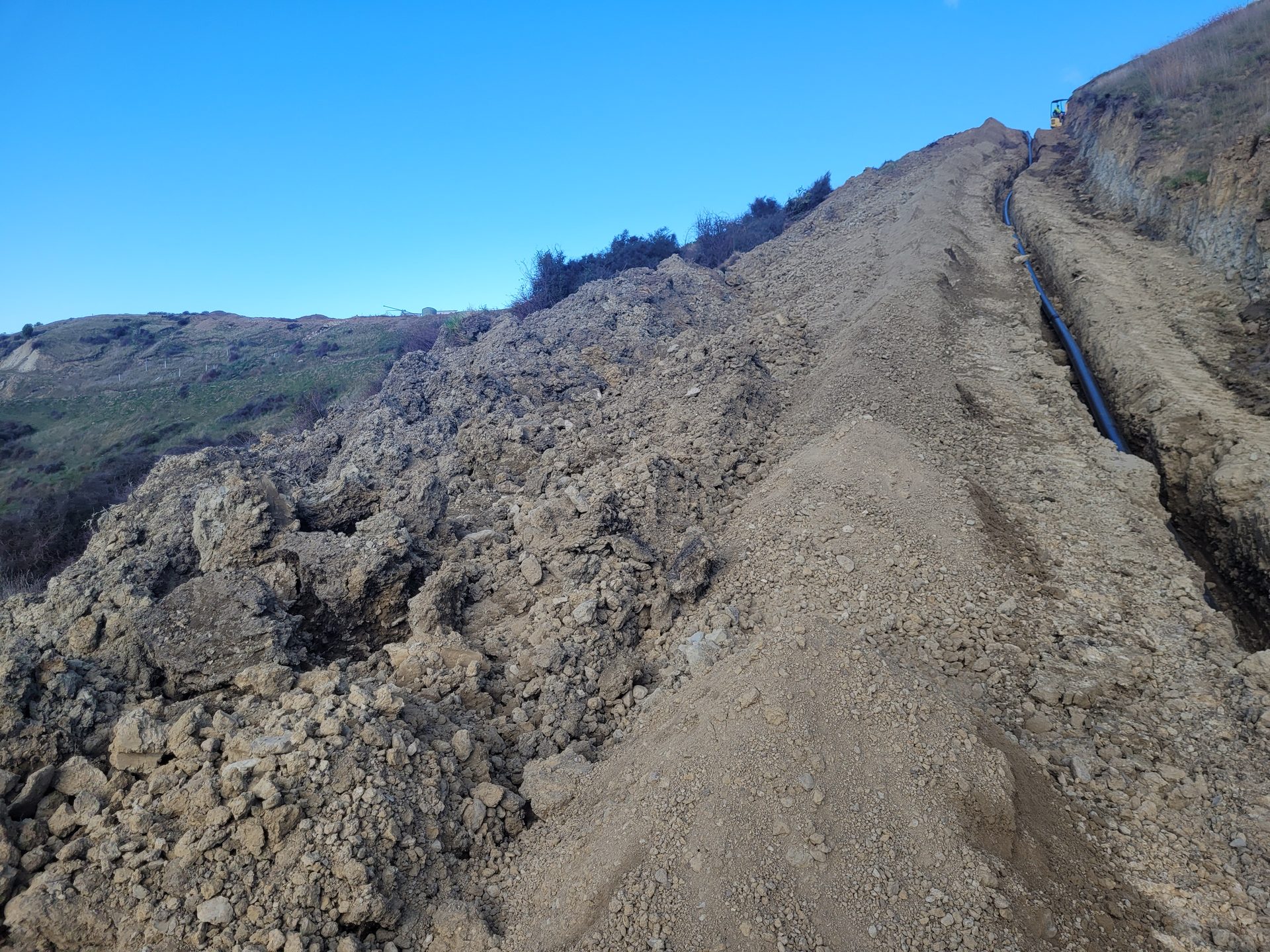
Need land restored or a site cleaned up? We handle remediation jobs across the Marlborough region. It sits alongside the other earthworks we do across Marlborough.
Get a Free Quote